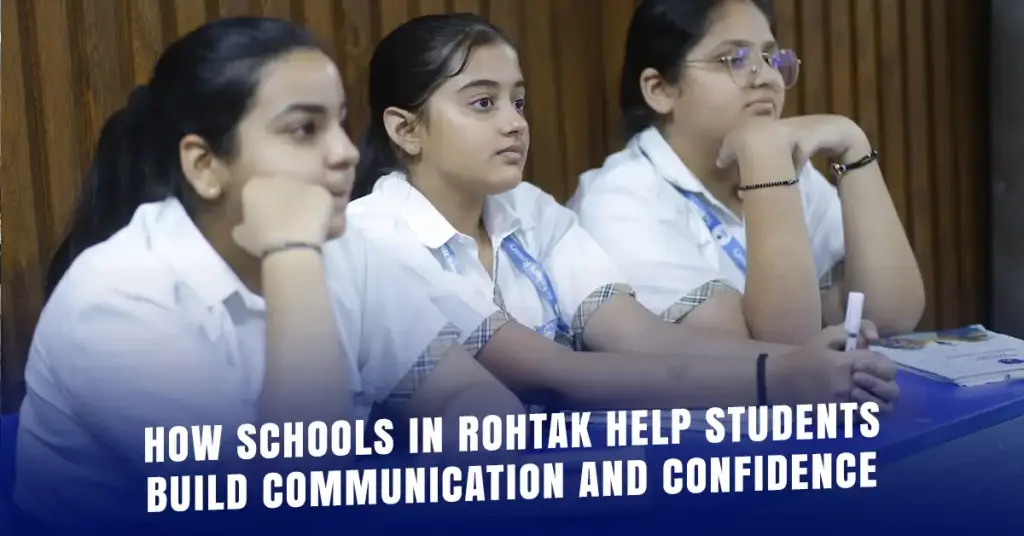
Communication and confidence are two qualities that can make a real difference in a person’s life. They matter not only in a career but also in friendships, relationships, decision-making, and the way a person handles difficult situations. These qualities begin to develop during childhood, through experiences at home and at school.
A child who learns to speak without fear, express an opinion, ask questions, listen to others, and stand up for themselves is better prepared to face whatever life brings. Schools have an important role in creating those experiences. It is not enough to tell children to “be confident”. They need opportunities to practise confidence, make mistakes, try again, and slowly become comfortable putting themselves forward.
At Scholars Rosary, one of the top schools in Rohtak, we try to create those opportunities in different parts of school life. Confidence is not built in one activity or one classroom. It grows gradually through everyday experiences.
Helping Students Overcome the Fear of Speaking
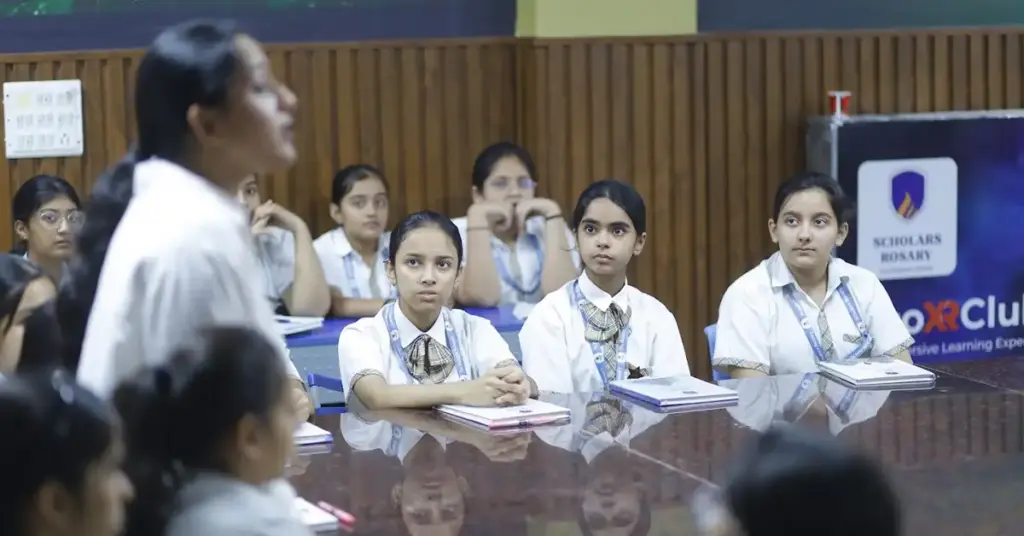
Some children are naturally comfortable speaking in front of others. Others are shy and would rather stay quiet even when they know the answer. A child may know exactly how to solve a problem but still hesitate to raise their hand because they are worried about making a mistake.
This is where our teachers play an important role. Students are regularly encouraged to come to the front of the class, answer questions, solve problems, explain their thinking, or share what they have learned. Teachers pay particular attention to students who are hesitant or shy and give them repeated opportunities to participate.
The purpose is not to expect a perfect answer every time. A student may get the answer wrong, forget something, or struggle to explain an idea clearly. That is part of learning. What matters initially is that they are willing to stand in front of their classmates and try.
Gradually, children begin to understand something very important: a wrong answer is not a disaster. Their classmates are not going to laugh at them, the teacher is not going to punish them for trying, and the world does not end because they made a mistake.
Once that fear starts to disappear, confidence begins to take its place. Teachers can then guide that confidence in the right direction, helping students listen more carefully, participate more actively, complete their work, ask questions when they need help, and eventually answer with greater clarity and accuracy.
Through Sports, We Build Confidence and Communication Skills
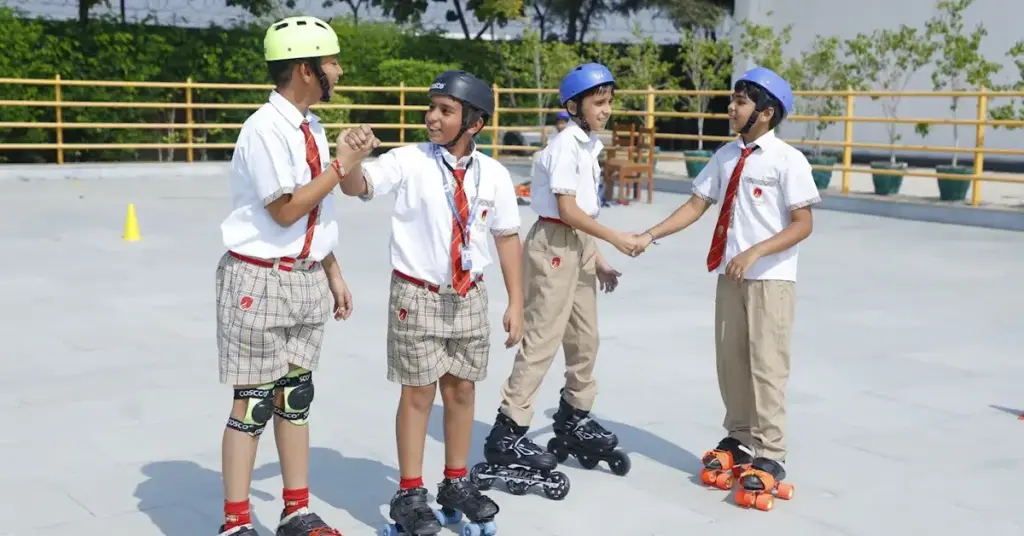
There are many schools in Rohtak, but what sets Scholars Rosary apart is our partnerships with internationally recognised sports organisations. Through our partnerships with organisations such as the NBA, LaLiga, Shazam Sports, and Guns for Glory, students get opportunities to learn sports through quality facilities, experienced coaches, and structured training. Whether a student enjoys basketball, football, shooting, or another sporting activity, having the opportunity to learn and practise in a proper environment can make a real difference.
But the most valuable lessons often come during the games themselves. Students learn what it feels like to face a stronger opponent and still give their best. They learn that winning requires preparation and teamwork, while losing does not mean giving up. A defeat becomes something they can learn from and return from stronger the next time.
Sports also teach children how to communicate quickly with teammates, listen to instructions, take responsibility for their role, and support others. They learn sportsmanship, fairness, respect, and the difference between healthy competition and poor behaviour.
Perhaps the most important confidence a child develops through sport is the belief that “I can give my best even when the person standing opposite me is better than me.” Sometimes they win. Sometimes they do not. But they learn to step onto the field without being afraid of the challenge.
Giving Children a Voice Through Creative Activities
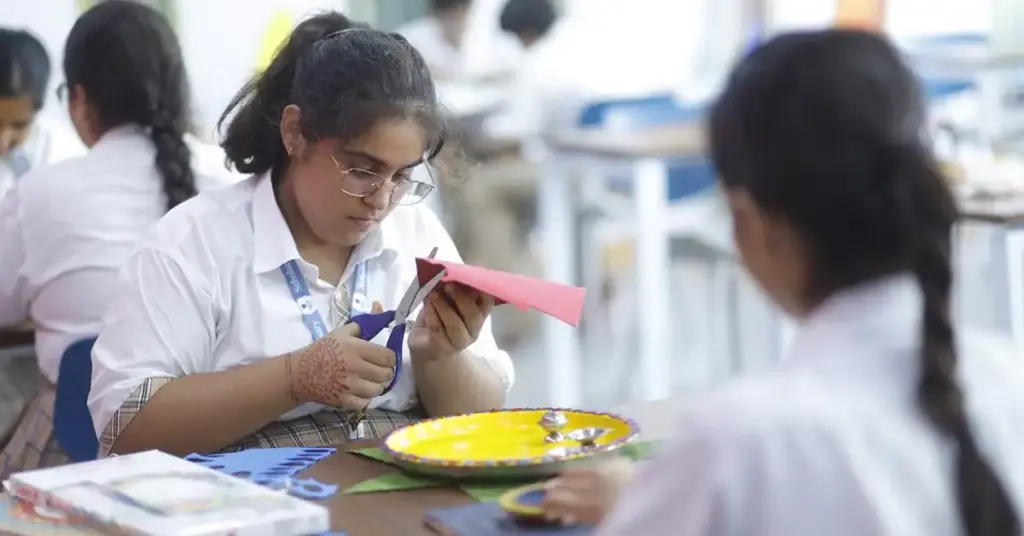
Not every child finds their confidence through speaking in front of a classroom. Some express themselves much better through art, music, dance, or other creative activities.
That is why we encourage our students to take part in activities such as painting, drawing, dancing, and singing. These are very valuable parts of a child’s school experience like learning in the classroom and sports fields. A child who may hesitate to speak may be completely comfortable expressing an idea through a painting or performing on stage.
Creative activities give students a chance to make choices, express their thoughts, perform in front of others, and explore different forms of expression. Stage fright is something almost every child experiences at some point, and these activities give them a safe way to gradually overcome it. Whether it is performing a dance, singing a song, or reading a poem they have written, standing in front of an audience requires confidence and the ability to express themselves clearly.
With each performance, students become a little more comfortable being seen and heard. Over time, these experiences help them overcome their hesitation and express themselves more confidently in other areas of life as well.
Clubs That Encourage Students to Speak, Think and Participate

Clubs provide another space where students can develop communication skills without the pressure of a formal classroom lesson.
At Scholars Rosary, students can take part in activities and clubs related to areas such as debate, English, Hindi, ecology, and other interests. These platforms encourage students to discuss ideas, ask questions, listen to different opinions, and express their own thoughts.
Debate, for example, teaches students that communicating well is not simply about speaking loudly or speaking more. They need to understand an issue, organise their thoughts, listen to another person’s argument, and respond thoughtfully.
Similarly, language-based activities help students become more comfortable with vocabulary, expression, reading, and speaking. These experiences gradually help children communicate with greater clarity and confidence.
Encouraging Students to Step Outside Their Comfort Zone
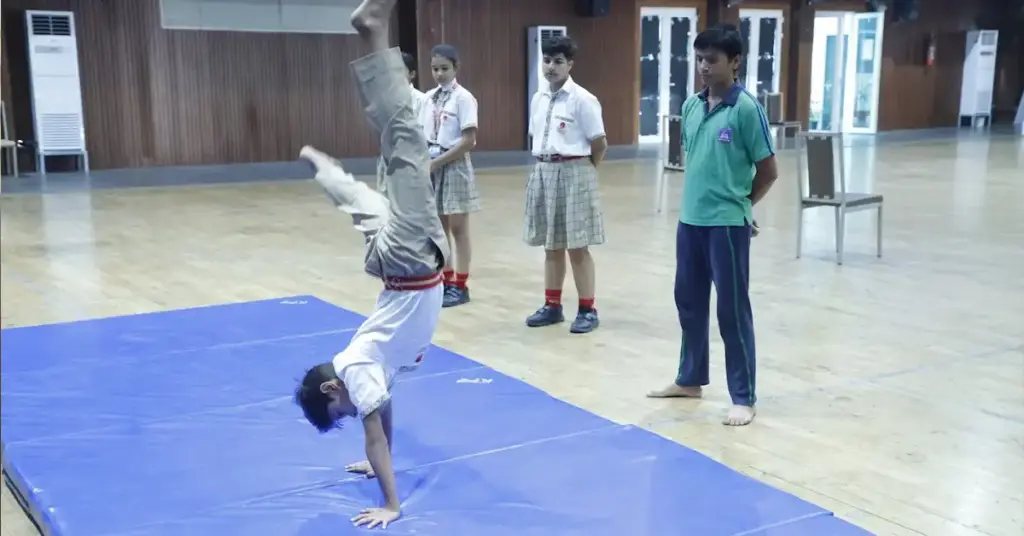
Confidence grows when children experience something new and realise that they can handle it. We therefore encourage and support students to participate in competitions and activities at the school, state, and national levels wherever appropriate.
These experiences take them beyond familiar classrooms and familiar faces. They meet students from other schools, interact with new people, perform in unfamiliar environments, and learn to manage the nervousness that naturally comes with a bigger opportunity.
They may not win every competition, and that is not the only measure of success. Standing on a stage, participating in a debate, competing in a sporting event, presenting an idea, or simply having the courage to participate can be an achievement in itself. Each such experience makes the next one a little easier.
Learning to Listen and Evaluate People and Situations

Good communication is not only about speaking confidently. Children also need to learn how to listen, understand different opinions, ask questions when something is unclear, and respond thoughtfully instead of immediately dismissing what someone else has said.
Classroom discussions, group activities, sports, clubs, and everyday interactions with teachers and classmates give students opportunities to develop these skills. When children learn to listen as carefully as they speak, their communication becomes more thoughtful and effective.
This becomes even more important as they grow older. Confidence without understanding can sometimes become arrogance, and expressing yourself without considering the situation can lead to poor decisions. We want our students to have the confidence to speak up, but also the maturity to understand when, where, and how they should do so.
For example, if a friend dares a child to jump from a first-floor balcony because they have learned a parkour technique, refusing to take that risk is not a lack of confidence. It is good judgement. Real confidence is being able to assess the person, place, and situation and make the right decision, even when others are encouraging you to do something unsafe.
This is an important lesson we want our students to understand: being confident does not mean saying yes to everything. Sometimes, the most confident decision is knowing when to say no.
Providing a Safe and Supportive Learning Environment
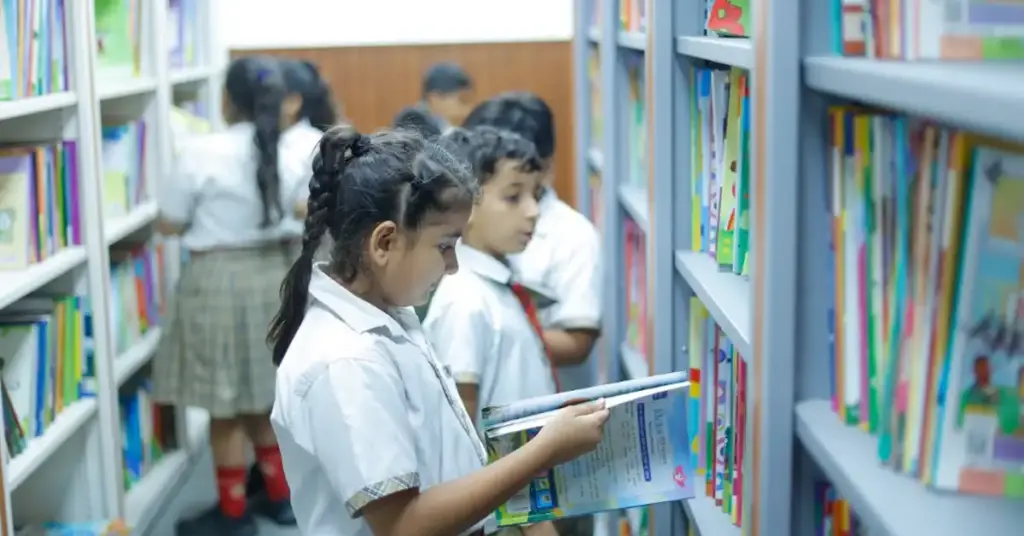
Children cannot learn properly when they are constantly worried or afraid. A student who fears that a teacher will punish them for not completing their homework, or worries that a classmate may bully them for not sharing their lunch, stationery, or other belongings, may hesitate to speak, ask questions, or participate in class.
When children feel unsafe or uncomfortable, they often become quiet and withdrawn instead of confident and expressive. At Scholars Rosary, we understand how important it is for students to feel safe, respected, and cared for both in the classroom and on the playground.
Our teachers and staff make every effort to ensure that bullying, violence, and behaviour that makes another student feel unsafe are not tolerated. Students should know that they can approach their teachers or other staff members when they have a problem and that they will be listened to and supported.
The way teachers interact with students also matters. We encourage our teachers to guide children with patience and kindness, help them when they struggle, and make them feel comfortable asking questions or admitting when they do not understand something. Making a mistake should be part of learning, not something a child is afraid of.
When students feel safe and know that they will be treated with care and respect, they gradually become more comfortable speaking up, asking questions, sharing their thoughts, and interacting with others. This is how a safe school environment can slowly help children become better communicators and more confident in expressing themselves.
The Value We Provide to Our Students
At Scholars Rosary, we believe parents should receive more value from their child’s education. With quality academics, modern infrastructure, experienced teachers, international sports partnerships, and opportunities beyond the classroom, we provide a learning experience that offers exceptional value for the fee, making us one of the best schools in Rohtak with low fees.
Conclusion:
All Aforementioned things Make Scholars Rosary One of the Best Schools in Rohtak Haryana
For families comparing schools in Rohtak, academic performance will naturally remain an important consideration. But it is equally worth asking how a school helps children develop the qualities that marks alone cannot measure.
At Scholars Rosary, we believe confidence and communication are built through repeated, everyday experiences. A child answering a question in class, playing alongside teammates, performing on stage, participating in a debate, joining a club, or representing the school in a competition is learning something about themselves each time.
Some children find their voice quickly. Others need more encouragement and more opportunities. Our responsibility is to give both the space to grow. For parents exploring top schools in Rohtak, the right school is not simply one that teaches children what to learn. It is one that also helps them develop the confidence to use what they know, communicate their ideas, handle setbacks, and face new situations without fear.
And for families looking at schools in Rohtak Haryana, that is an important part of the education we want to provide at Scholars Rosary: helping children leave school not only with knowledge, but with the confidence to use it and the ability to communicate it with clarity and purpose.
Frequently Asked Questions
1. Why are communication skills important for school students?
Communication skills help children express their thoughts clearly, ask questions, share their opinions, and understand others. These skills are useful not only in academics but also in friendships, future careers, and everyday situations. Learning to communicate well from an early age can help students handle new people and situations with greater ease.
2. How do schools help children become more confident?
Schools can build confidence by giving students regular opportunities to participate rather than expecting them to simply listen. At Scholars Rosary, students are encouraged to answer questions, solve problems in front of their classmates, participate in discussions, take part in activities, and represent the school in competitions. Even when an answer is incorrect, students are encouraged to try again instead of being afraid of making mistakes.
3. Can shy children improve their communication skills in school?
Yes. Shyness does not have to remain a permanent part of a child’s personality. With patience and regular opportunities to participate, shy students can gradually become more comfortable speaking and interacting with others. Support from teachers is particularly important because children need to feel that they can make mistakes without being embarrassed or discouraged.
4. What activities help students improve communication and confidence?
A variety of school activities can help. Classroom discussions, presentations, debates, sports, creative activities such as singing, dancing and performing, and clubs related to English, Hindi, ecology, and other interests all give students opportunities to express themselves. Competitions at the school, state, and national levels can also help students step outside their comfort zone and become more comfortable in new environments.
5. How important are teachers in developing communication skills?
Teachers play a very important role because they create many of the situations in which children learn to speak, listen, ask questions, and express their ideas. A supportive teacher can encourage a hesitant student to participate, give them time to answer, and help them learn from mistakes. At Scholars Rosary, teachers also encourage students to listen to different opinions and understand when and how to express themselves appropriately.
6. Do extracurricular activities help students become more confident?
Yes. Activities outside regular classroom lessons give students different ways to discover their strengths and express themselves. Sports, performing arts, clubs, and competitions can help children work with others, handle pressure, accept setbacks, and take responsibility. This is one reason many schools in Rohtak give extracurricular activities an important place alongside academics. At Scholars Rosary, these experiences are used to help students develop confidence, communication skills, and a willingness to participate.