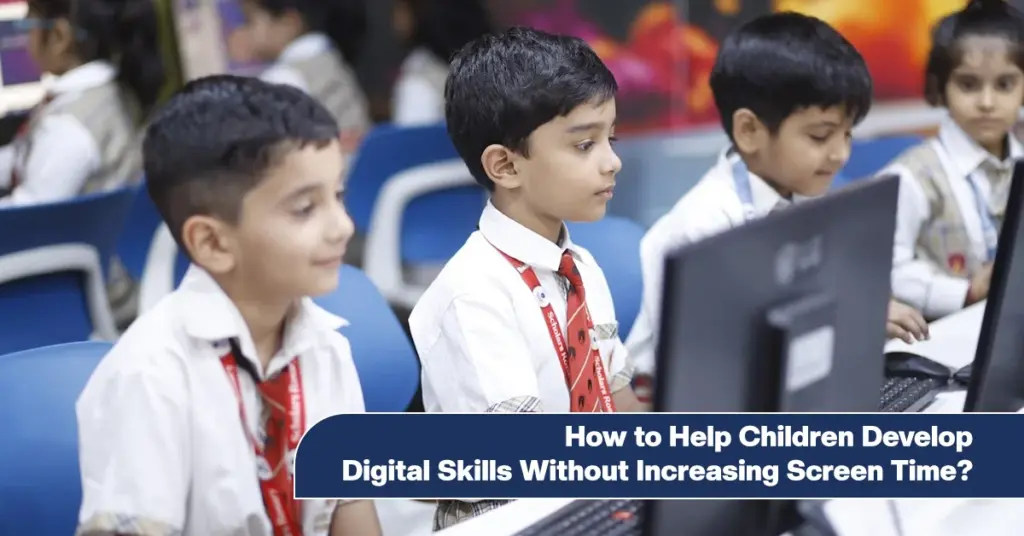
Digital skills have become an important part of everyday life. We use technology for education, communication, business, healthcare, banking, entertainment, travel, and many other things. The way we work and learn is also changing quickly, especially with the rapid development of artificial intelligence.
For children growing up in this environment, learning how to use technology properly is becoming just as important as learning other basic skills. They should know how to use a computer, find reliable information, create digital content, use useful applications, and understand new technologies such as AI.
At the same time, parents have a genuine concern. Teaching digital skills usually means giving children access to computers, tablets, phones, or other devices, and too much unstructured screen use can easily turn into watching short videos, playing games, or spending hours on entertainment.
The answer is not to keep children away from technology completely. Instead, parents can help children learn to use technology for a purpose rather than simply spending more time on screens. At Scholars Rosary Senior Secondary School, we understand the importance of finding this balance, and we also encourage parents to take a similar approach at home.
What Digital Skills Should Children Learn?
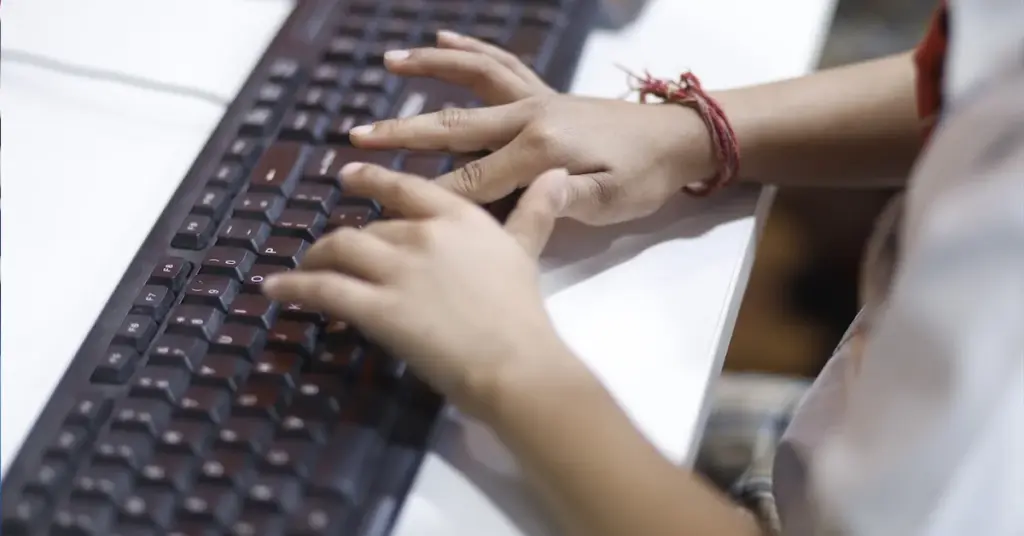
Digital skills are not limited to knowing how to operate a smartphone or use social media. Children can gradually learn a much wider range of useful skills, such as:
- Using a computer, keyboard, mouse, and basic software
- Typing and formatting documents
- Creating presentations
- Searching for information online
- Understanding how to identify useful and reliable information
- Using educational applications and digital learning platforms
- Creating and editing basic digital content
- Learning coding and basic programming concepts
- Understanding how websites and digital tools work
- Using AI tools responsibly for learning and research
- Protecting passwords and personal information
- Understanding basic online safety and digital behaviour
The important part is how children use these skills. Simply giving them a device does not teach digital literacy. Children need to learn how to use technology to create, research, solve problems, communicate, and learn.
How Can Parents Teach Digital Skills Without Increasing Screen Time?
Parents do not necessarily need to give children more entertainment screen time to develop digital skills. Instead, they can turn some of the time children already spend using devices into purposeful learning activities.
1. Give Them Small Computer-Based Tasks
Start with simple activities. Ask your child to type a short story, create a document, make a small presentation, or organise information in a table.
For example, instead of asking them to watch a video about animals, ask them to research five animals, write a few facts about each one, and create a simple presentation. The child is still using a screen, but the activity requires reading, thinking, organising information, and creating something.
2. Let Children Research a Topic
Give your child a topic they are interested in and ask them to find information about it online.
It could be space, dinosaurs, cricket, Indian history, animals, technology, or even how their favourite food is made. The important part is to teach them that they should not simply copy the first answer they find.
Ask them to compare information from different sources, understand what they have read, and explain it in their own words. This develops research skills along with digital skills.
3. Teach Them to Use AI as a Learning Tool
Children will encounter AI more and more as they grow, so learning how to use it responsibly is important.
For example, you could ask your child to use an AI tool such as ChatGPT to understand a difficult topic or find ideas for a writing assignment. But instead of copying the answer, ask them to read it, check whether they understand it, and then write the final response in their own words.
This teaches children that AI can help them learn, but it should not replace their own thinking.
4. Let Them Create a Small Digital Project
One simple project can teach several digital skills at once.
For example, ask your child to write a short blog about a topic they enjoy. They can research the topic, make notes, write the article on a computer, add suitable images, and format the content properly.
If they are old enough, parents can introduce them to a simple publishing platform such as Google’s Blogger and help them understand how a basic blog is created and published.
The activity teaches writing, research, typing, formatting, basic publishing, and responsible use of online platforms in one project.
5. Encourage Digital Creativity
Technology can also be used for creative activities.
Children can create a digital drawing, make a presentation about a school project, edit photographs, create a simple animation, record a short educational presentation, or design a poster.
The objective should be to help them make something, rather than continuously consume content created by others.
6. Turn Learning Into a Small Challenge
Children are often more interested when an activity feels like a challenge rather than another lesson.
Parents can give them a small task such as creating a presentation with five slides, typing a one-page story without help, researching a topic and explaining it to the family, or creating a simple digital poster.
You can even give them a small reward after completing the activity correctly. It could be their favourite snack, an outing, or another activity they enjoy. This can make learning technology more engaging without turning screen use into unrestricted entertainment.
7. Set a Clear Purpose Before Giving Screen Access
Before your child starts using a device, make it clear what they are going to do.
For example, “You have 30 minutes to research your science project” is very different from giving a child a phone and allowing them to decide what to watch.
Once the task is complete, the device can be put away. This simple habit helps children understand that technology is a tool with a purpose rather than something they need to use continuously.
8. Teach Online Safety Along the Way
Digital education should also include basic online safety.
Children should understand why they should not share passwords, personal information, photographs, school details, or other private information with strangers online. They should also know that not everything they see online is accurate and that they should speak to a parent or teacher if something online makes them uncomfortable.
These lessons become increasingly important as children become more independent internet users.
How We Develop Digital Skills at Scholars Rosary Senior Secondary School

At Scholars Rosary Senior Secondary School, we believe technology should support learning rather than simply increase students’ screen exposure. Our approach combines technology with classroom teaching, practical activities, discussions, and hands-on learning so that students understand how to use digital tools productively.
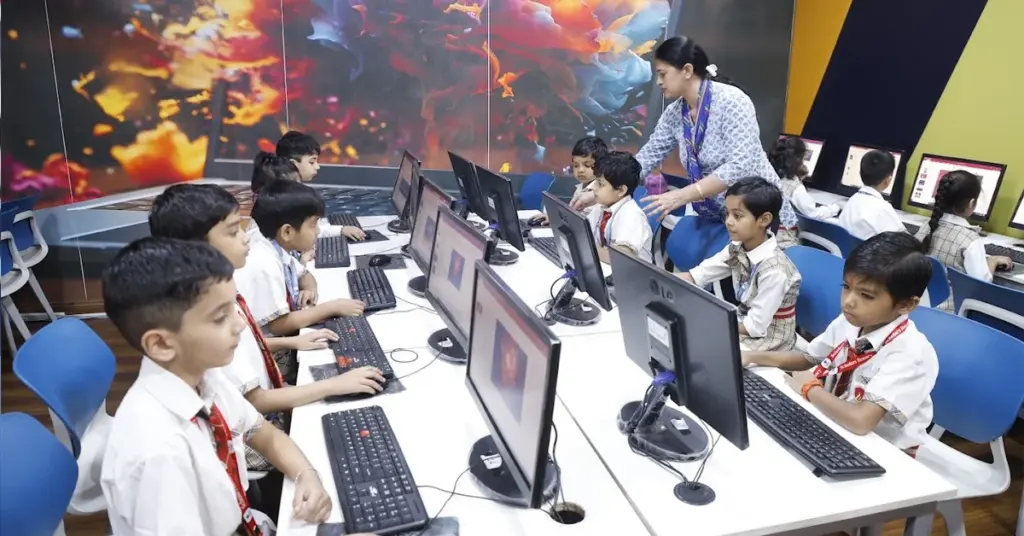
Our campus includes smart classrooms, computer labs, robotics, VR, STEM facilities, and other technology-supported learning spaces where students can explore concepts through practical experiences. These facilities give students opportunities to use technology as part of their education rather than only as a source of entertainment.
Students also get opportunities to develop skills such as research, problem-solving, communication, coding, and innovation through projects and technology-based activities. Teachers guide students through these activities and help them understand how digital tools can be used to find information, solve problems, present ideas, and create something of their own.
We also believe that technology works best when it is combined with human guidance. Teachers continue to play an important role by explaining concepts, answering questions, demonstrating practical applications, and helping students understand how and when a digital tool should be used.
This balanced approach helps students become more comfortable with technology while keeping their learning focused on understanding, creativity, and practical application.
For parents looking for the Best School in Rohtak, digital learning should therefore be considered as part of the school’s overall teaching approach rather than simply the number of computers or smart boards available. What matters is how students are taught to use technology and whether those tools actually contribute to their learning.
Conclusion
Children need digital skills to prepare for the world they are growing up in, but developing these skills does not mean giving them unlimited access to screens.
Parents can start with simple, purposeful activities such as typing, research, presentations, creative projects, coding, and responsible use of AI. The focus should remain on what children are doing with technology, rather than simply how much time they spend using it.
Schools also have an important role to play in this process. At Scholars Rosary Senior Secondary School, we use technology alongside classroom teaching, practical learning, and teacher guidance to help students become capable and responsible users of digital tools. Our aim is to help students understand technology, use it creatively, and develop the skills they will need as the digital world continues to change.
FAQs
1. Can Children Learn Digital Skills Without Spending More Time on Devices?
Children can learn digital skills through purposeful activities such as typing, research, presentations, coding, and digital projects. The focus should be on using technology to learn and create rather than increasing recreational screen time.
2. What Digital Skills Should Students Learn for the Future?
Students should learn computer use, typing, online research, presentations, digital communication, coding, problem-solving, online safety, and responsible use of AI. These skills help them use technology effectively for education and future work.
3. How Can Parents Make Screen Time More Educational for Children?
Parents can give children specific tasks such as researching a topic, creating a presentation, writing an article, or learning a coding concept. Asking them to explain what they learned or create something from it makes screen use more purposeful.
4. How Can Schools Teach Digital Skills Without Keeping Students on Computers All Day?
Schools can combine technology with classroom discussions, practical activities, projects, experiments, and group work. At Scholars Rosary, students use smart classrooms, computer labs, robotics, VR, and STEM facilities alongside hands-on learning.
5. How Can Students Use AI Without Becoming Dependent on It?
Students should use AI to understand concepts, research topics, or generate ideas, but they should check the information and develop their own answers. Teachers and parents should encourage students to think, solve problems, and write independently instead of simply copying AI-generated content.
6. How Can I Teach My Child Online Safety From an Early Age?
Teach children not to share passwords, personal information, photographs, or school details online. They should also learn to question information they find online and tell a parent or teacher if they encounter something inappropriate or uncomfortable.