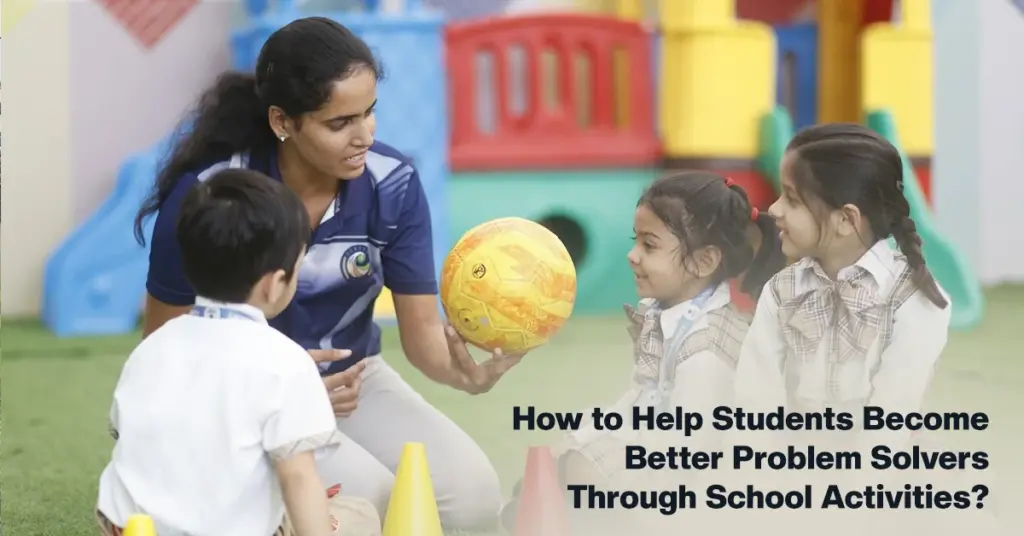
Problem-solving is an important skill that children need both inside and outside the classroom. Whether they are trying to understand a difficult Maths question, complete a science activity, decide how to work with classmates, or find a way to complete a project, children face situations where they need to think and find a solution.
Problem-solving does not develop only by solving questions from a textbook. Children also learn it when they are given opportunities to explore, make decisions, try different approaches, and learn from their mistakes. This is why school activities have an important role in developing this skill from the early years.
At Scholars Rosary Preparatory School, we encourage children to learn through activities and experiences that require them to think, participate, and find solutions. For parents looking for the Best Primary School in Rohtak, it is worth looking at how a school develops these skills as part of everyday learning rather than treating them as a separate subject.
How School Activities Help Children Become Better Problem Solvers
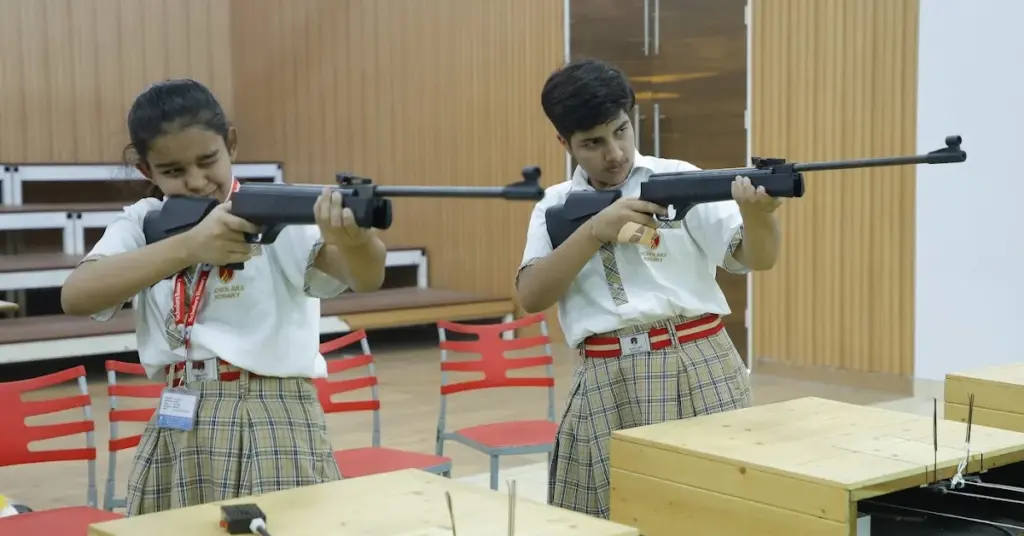
1) Give Children Opportunities to Find Their Own Solutions
When teachers give children every answer immediately, they get fewer opportunities to think for themselves. Instead, teachers can give them a situation or a task and allow them to think about how they can solve it.
For example, during a classroom activity, students may be given a simple problem that has more than one possible solution. They can discuss their ideas, try different methods, and explain why they think their approach will work. This helps children understand that solving a problem often requires thinking about different possibilities.
2) Learning Through Maths Activities
Mathematics is naturally connected with problem-solving, but children do not always need to solve problems only from a textbook. Teachers can use objects, puzzles, games, patterns, counting activities, and everyday examples to help children understand mathematical concepts. When children have to work out how many objects they need, identify a pattern, compare quantities, or find a way to complete a task, they are using mathematical thinking to solve a problem. These activities also make it easier for young children to understand why they are learning a particular concept.
3) Science and Hands-On Activities
Science activities give children opportunities to observe, ask questions, make predictions, and find out what happens when they try something.
Instead of simply telling children what will happen, teachers can sometimes let them make a prediction first and then carry out an activity to see whether they were correct. If the result is different from what they expected, they can discuss why it happened.
This simple process teaches children to observe carefully, think about their ideas, and try to understand the reason behind a result.
4) Group Activities Teach Children to Solve Problems Together
Not every problem needs to be solved alone. Group activities teach children how to listen to others, share ideas, divide responsibilities, and work towards a common goal. Sometimes students may have different opinions about how to complete a task, and they need to discuss their ideas and decide what works best. These experiences help children understand that problem-solving can also involve communication and teamwork.
5) Storytelling and Role Play
Storytelling and role play can also be useful for developing problem-solving skills. Teachers can give children a situation from a story and ask what they think the character should do next. Children can suggest different solutions and explain their choices. Role play can take this a step further by allowing them to act out the situation and explore different ways of dealing with it. These activities encourage children to think about situations from different points of view while improving their communication skills.
6) Encourage Children to Learn From Mistakes
Children should understand that getting something wrong is part of learning. When a student gives an incorrect answer or a particular approach does not work, teachers can ask them to look at the problem again and understand where they went wrong. This helps children think about their process instead of simply waiting for the correct answer. Over time, this can make them more comfortable trying different approaches and solving unfamiliar problems.
How We Develop Problem-Solving Skills at Scholars Rosary Preparatory School

At Scholars Rosary Preparatory School, we use activity-based and interactive learning to help children understand concepts and apply what they learn. Our teachers encourage students to participate in discussions, ask questions, work on activities, and explore different ways of approaching a task.
Our learning environment includes facilities such as a STEM and Aero Lab, Maths Lab, Computer Lab, library, art and craft spaces, indoor games, and other activity areas. These provide students with opportunities to learn beyond regular textbook exercises and apply their thinking in different situations.
Teachers also give individual attention to students and observe how they approach different activities. When a child finds something difficult, the aim is not simply to provide the answer but to guide the child towards understanding the problem and finding a suitable solution.
Problem-solving is also developed through everyday classroom interactions. Asking students to explain their answers, encouraging them to ask questions, allowing them to work with classmates, and giving them opportunities to make decisions all contribute to their development.
How Parents Can Develop Problem-Solving Skills at Home
Parents can continue the same approach at home through simple everyday activities. Children can be involved in cooking, organising their room, planning a small activity, solving puzzles, playing board games, or helping with age-appropriate household tasks.
Instead of solving every small problem for them, give children some time to think about what they can do themselves. You can ask questions such as, “What do you think we should do?” or “Can you think of another way?” This encourages them to explain their thinking and consider different solutions.
Parents can also read stories with children and discuss what the characters could have done differently. Even simple conversations like these help children think about situations and possible solutions.
Conclusion
Problem-solving is a skill that develops gradually through regular practice and everyday experiences. Children become better problem solvers when they get opportunities to ask questions, explore ideas, work with others, make decisions, and learn from mistakes.
At Scholars Rosary Preparatory School, we include these opportunities in our everyday learning through classroom activities, practical experiences, STEM and Maths activities, group work, creative activities, and individual guidance. Our aim is to help children understand what they learn and develop the ability to think about how they can use that knowledge in different situations.
For parents comparing schools and looking for the Best Primary School in Rohtak, the way a school teaches children to think and solve problems is an important part of the learning experience.
FAQs
1. Which Classroom Activities Are Most Effective for Improving Problem-Solving Skills in Students?
Activities that require children to think, make decisions, and find solutions are particularly useful. Maths puzzles, STEM activities, experiments, group tasks, and classroom challenges give students opportunities to try different approaches and understand how their decisions affect the result.
2. How Do Group Activities Teach Children to Solve Problems Together?
Group activities require children to share ideas, listen to their classmates, divide responsibilities, and agree on a way to complete the task. They also learn that different people can suggest different solutions to the same problem.
3. Can Art, Storytelling and Creative Activities Improve Problem-Solving Skills?
Yes. Creative activities allow children to think of different ideas and decide how they want to complete a task. Storytelling and role play can also help children think about a situation from different perspectives and suggest possible solutions.
4. Why Are Real-Life Activities Important for Developing Problem-Solving Skills in Children?
Real-life activities help children understand how problem-solving is used outside textbooks. Tasks such as organising materials, planning an activity, measuring ingredients, or deciding how to complete a project require children to think, make decisions, and find practical solutions.
5. How Can Project-Based Learning Help Students Become Better Problem Solvers?
Project-based learning gives students a task or goal that they need to complete over time. They have to research, plan, make decisions, deal with challenges, and sometimes change their approach, helping them develop problem-solving skills through the learning process.
6. Can Puzzles and Brain Games Improve a Child’s Problem-Solving Ability?
Yes. Puzzles, strategy games, and age-appropriate brain games encourage children to look for patterns, think logically, and try different solutions. When used regularly as part of a wider range of activities, they can support the development of problem-solving skills.